
Digital marketing works for a B2B company by supporting how businesses actually make decisions.
Unlike consumer marketing, B2B buying is rarely impulsive. Decisions involve research, internal discussion, risk assessment, and multiple stakeholders. Digital marketing in this context is not designed to push immediate conversions, but to guide decision-making over time.
When done correctly, digital marketing becomes part of the buying process rather than a separate promotional layer.
B2B Digital Marketing Aligns With the Buying Journey
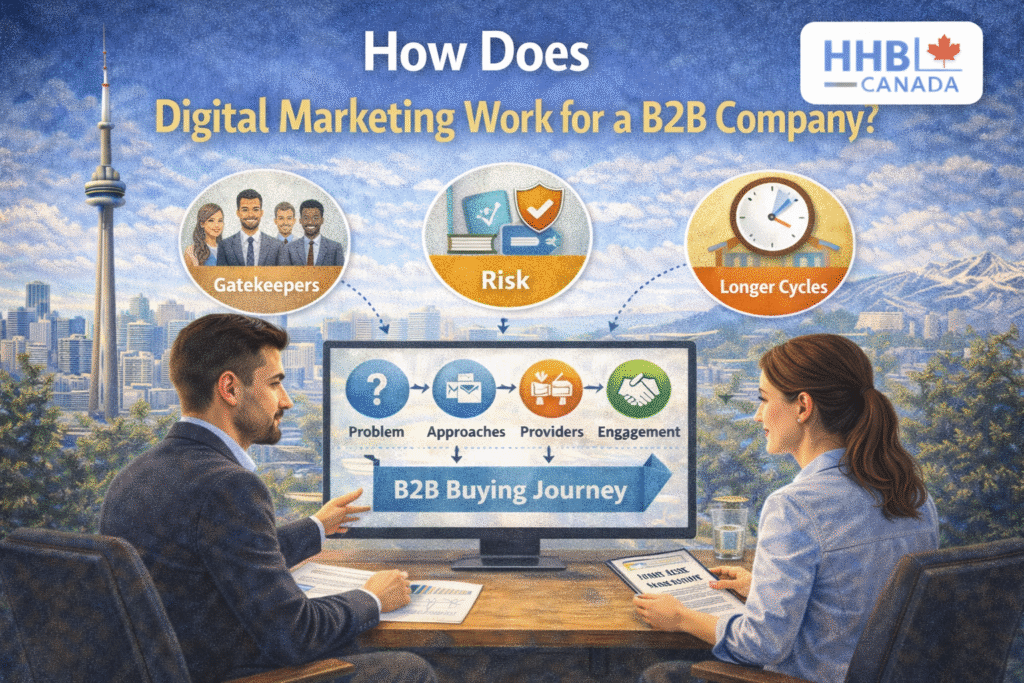
In B2B, buyers move through a deliberate journey.
They first recognize a problem, then explore potential approaches, evaluate providers, and finally engage in direct conversations. Digital marketing supports each of these stages by making information accessible, consistent, and credible.
Rather than forcing action, effective B2B marketing focuses on being present when questions arise. This alignment is what allows marketing to influence outcomes without feeling intrusive.
Visibility Precedes Lead Generation
Many B2B companies approach digital marketing expecting immediate leads. In practice, visibility usually comes first.
Search presence, informative content, and targeted exposure help a company become familiar before any form is submitted. By the time a buyer reaches out, they often already understand the offering and expectations.
In B2B, lead generation is often the result of accumulated visibility, not the starting point.
Quick read: Best Google Ads Agency for Psychiatrists in 2026
Content Is the Backbone of B2B Digital Marketing
Content plays a central role in how digital marketing works for B2B companies.
Buyers want to reduce uncertainty. They look for explanations, frameworks, comparisons, and evidence of understanding. Content provides this context in a scalable way, allowing businesses to answer questions consistently without relying solely on sales conversations.
Unlike consumer content, B2B content prioritizes clarity and usefulness over entertainment. Its purpose is to help buyers make confident decisions.
Search Intent Matters More Than Traffic Volume
B2B digital marketing focuses on intent, not reach.
Search volumes may be lower than in consumer markets, but the relevance of each interaction is higher. Ranking for the right queries and addressing the right concerns matters more than generating large amounts of traffic.
Digital marketing works best when it mirrors how B2B buyers actually search, evaluate, and shortlist providers.
Paid Advertising Reinforces, Not Replaces, the Process
In B2B, paid digital advertising is typically used to support visibility and reinforce positioning rather than drive mass conversions.
Well-structured campaigns focus on reaching specific decision-makers, staying visible during long evaluation cycles, and re-engaging interested prospects. Advertising complements organic efforts by providing precision and control.
The goal is presence at critical moments, not constant lead volume.
Trust Signals Are Central to Effectiveness
Trust is a prerequisite in B2B marketing.
Buyers evaluate risk before value. Professional presentation, consistent messaging, clear explanations, and evidence of expertise all contribute to credibility. Digital marketing ensures these signals are present wherever buyers interact with the brand.
Often, marketing does not close the deal directly. It determines whether a company is considered credible enough to enter serious discussion.
Measurement Looks Beyond Immediate Conversions
Because B2B sales cycles are longer, digital marketing performance cannot be judged solely on short-term conversions.
Engagement patterns, repeat visits, content consumption, and assisted interactions provide insight into whether marketing efforts are influencing decisions upstream. Over time, these signals correlate with pipeline quality and sales effectiveness.
Measurement in B2B marketing is about understanding momentum, not just counting leads.
Digital Marketing Supports Sales, Not Substitutes It
Digital marketing and sales are interdependent in B2B.
Marketing educates, contextualizes, and prepares buyers. Sales personalizes, qualifies, and finalizes decisions. When these functions are aligned, sales conversations become more efficient and productive.
When they are disconnected, marketing feels ineffective and sales feels unsupported.
Why B2B Digital Marketing Often Feels Slow
Many B2B companies feel digital marketing is slow because expectations are shaped by consumer examples.
In reality, B2B marketing compounds. Early efforts build assets, visibility, and trust that strengthen over time. Results are typically steadier and more predictable rather than immediate and dramatic.
This pace is not a flaw. It reflects how B2B decisions are made.
Final Thoughts
Digital marketing works for a B2B company by aligning with how businesses research, evaluate, and decide.
It builds visibility before demand, clarity before contact, and trust before conversion. When approached as a long-term system rather than a short-term campaign, digital marketing becomes a strategic advantage rather than an expense.
For B2B companies, effectiveness is measured less by speed and more by consistency, relevance, and credibility.