
Digital marketing is important for B2B because it aligns with how modern business buyers research, evaluate, and make decisions.
B2B purchasing has changed. Buyers now educate themselves long before speaking to a sales representative. They compare options privately, involve multiple stakeholders, and seek reassurance before committing. Digital marketing supports this process by making information accessible, consistent, and credible at every stage.
Without it, many B2B companies become invisible during the most influential part of the buying journey.
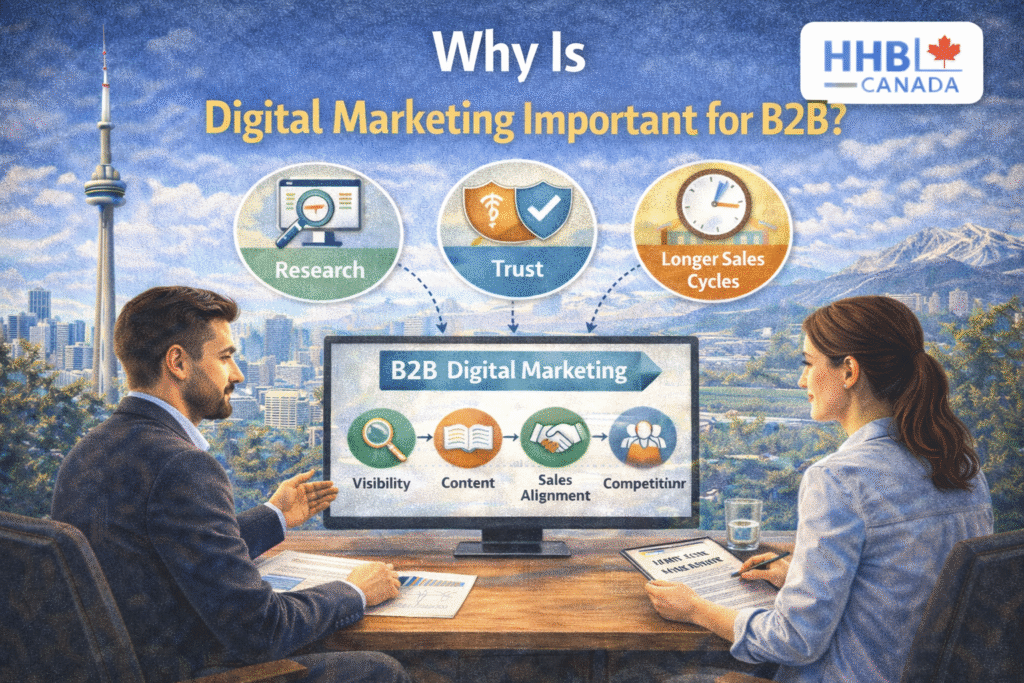
B2B Buyers Research Before They Engage
In B2B markets, buyers rarely start with a sales conversation.
They begin by identifying a problem, exploring potential approaches, and narrowing down providers independently. Search engines, websites, and content play a central role in this early research phase.
Digital marketing ensures that a company is present when buyers are asking questions, not just when they are ready to buy.
Visibility Shapes Perception Before Contact
In B2B, being visible is often a prerequisite to being considered.
If a company does not appear in search results, publish helpful content, or maintain a credible online presence, it may never enter the buyer’s shortlist. Digital marketing establishes familiarity before direct interaction occurs.
By the time a buyer reaches out, their perception has already been shaped by what they have seen online.
Trust Is a Core Requirement in B2B Decisions
B2B purchases involve risk.
Decisions can affect revenue, operations, and careers. Buyers look for signals that reduce uncertainty, such as clear explanations, consistent messaging, and evidence of expertise. Digital marketing provides these signals across multiple touchpoints.
Professional websites, informative content, and coherent positioning help buyers feel confident that a company understands its space.
Digital Marketing Supports Longer Sales Cycles
B2B sales cycles are typically longer than consumer cycles.
Digital marketing maintains engagement during these extended periods. Content, remarketing, and search visibility keep a company top of mind as buyers move through internal discussions and evaluations.
Rather than pushing for immediate conversion, digital marketing supports continuity and relevance over time.
Quick read: Best Google Ads Agency for Psychiatrists in 2026
Importance Goes Beyond Lead Generation
Digital marketing is often evaluated only by the number of leads it generates. In B2B, its importance extends further.
It improves lead quality, shortens sales conversations, and aligns expectations before contact. Buyers who arrive through informed research are often more prepared and better qualified.
In this way, digital marketing improves efficiency as much as volume.
Alignment Between Marketing and Sales
Digital marketing is important for B2B because it strengthens the connection between marketing and sales.
Marketing educates and prepares buyers. Sales focuses on customization, qualification, and relationship-building. When these functions are aligned, sales teams spend less time explaining basics and more time addressing specific needs.
Digital marketing becomes a force multiplier for sales rather than a separate function.
Competitive Markets Demand Digital Presence
In competitive Business‑to‑business markets, digital marketing is no longer optional.
Competitors are investing in visibility, content, and positioning. Companies that do not participate risk being perceived as outdated or difficult to evaluate, even if their offerings are strong.
Digital marketing helps maintain relevance as expectations evolve.
Why Digital Marketing Creates Long-Term Advantage
Unlike short-term outreach, digital marketing builds assets.
Websites, content, and search visibility compound over time. Each improvement strengthens future performance rather than resetting when campaigns stop.
For B2B companies seeking predictable growth, this compounding effect is a significant advantage.
Common Misunderstandings About Importance
Some B2B companies assume digital marketing is only necessary for aggressive growth or large enterprises.
In reality, it is equally important for companies seeking stability, clarity, and consistent demand. Digital marketing does not replace relationships or referrals, but it reinforces them.
It supports how trust is built at scale.
Final Thoughts
Digital marketing is important for B2B because it reflects how business decisions are made today.
It builds visibility before demand, trust before contact, and alignment before conversation. When treated as a long-term system rather than a short-term tactic, digital marketing becomes an essential part of sustainable B2B growth.
For B2B companies, importance is measured not by speed, but by credibility, consistency, and relevance.