
Emojis can be used to enhance digital marketing strategies by adding emotional context, improving clarity, and increasing engagement when used deliberately.
They are not a replacement for strong messaging or strategy. Instead, emojis act as visual cues that help communicate tone, guide attention, and humanize digital communication in environments where text alone can feel flat or ambiguous.
Used correctly, emojis support comprehension rather than distract from it.
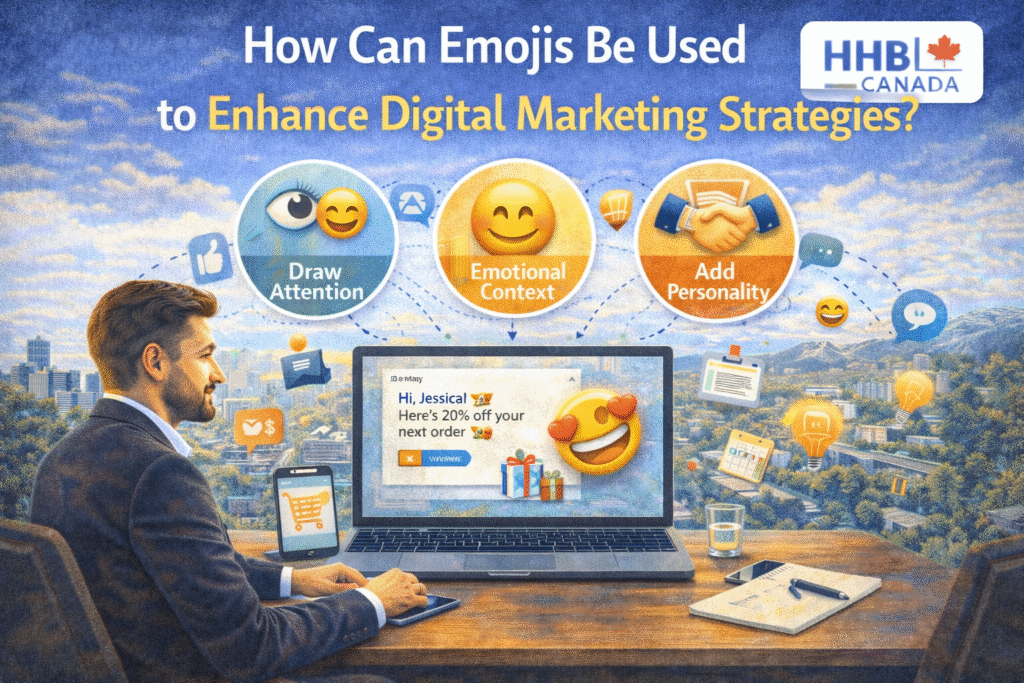
Why Emojis Influence Digital Communication
Digital marketing often lacks the nonverbal signals present in face-to-face communication.
Tone, intent, and emphasis can be difficult to interpret through text alone. Emojis help fill this gap by providing quick emotional or contextual signals that the brain processes almost instantly.
This added layer of meaning can make messages feel clearer, more approachable, and easier to interpret.
Emojis as Attention and Scanning Aids
One of the most practical ways emojis enhance digital marketing is by improving visual scanning.
In crowded environments such as social feeds, email inboxes, or long-form content, emojis can act as anchors that draw the eye. They help break up dense text and guide readers toward key points without requiring additional words.
When used sparingly, emojis improve readability rather than clutter it.
Emotional Framing and Perception
Emojis influence how messages are perceived emotionally.
A neutral sentence can feel more supportive, urgent, or reassuring depending on the emoji used alongside it. This framing affects how audiences interpret intent, especially in short-form communication like headlines, notifications, or calls to action.
In this way, emojis subtly shape perception without altering the core message.
Building Relatability and Brand Personality
Emojis can make brands feel more human when aligned with the brand’s voice.
For businesses that aim to appear approachable, modern, or conversational, emojis help soften formal language and reduce distance. They signal that communication is coming from people rather than systems.
However, relatability depends on restraint. Overuse can feel forced or unprofessional, especially in industries where trust and clarity matter more than informality.
Improving Engagement in Certain Channels
Emojis tend to have the greatest impact in channels where attention is limited.
Email subject lines, social media posts, push notifications, and short-form content often benefit from subtle emoji use. In these contexts, emojis can increase open rates or interaction by making content stand out visually.
Their effectiveness depends on relevance. Emojis should reinforce the message, not compete with it.
Emojis and Clarity, Not Decoration
A common mistake is treating emojis as decoration.
Effective use involves clarity. Emojis work best when they replace or reinforce words rather than simply adding visual noise. For example, they can signal categories, steps, warnings, or outcomes more efficiently than additional text.
When emojis add meaning, they support strategy. When they add clutter, they weaken it.
Audience and Context Matter
Not all audiences respond to emojis in the same way.
Demographics, cultural norms, and industry expectations influence how emojis are perceived. What feels friendly in a consumer brand may feel inappropriate in a formal or regulated environment.
Digital marketing strategies should consider audience comfort and expectations before adopting emojis broadly.
Emojis in Long-Form and Educational Content
In longer content, emojis can be used selectively to support structure rather than tone.
They may help highlight examples, transitions, or emphasis points without disrupting readability. When integrated thoughtfully, they can make complex content feel less intimidating while preserving substance.
The goal is guidance, not entertainment.
Measuring Effectiveness Over Assumption
As with any marketing element, emoji use should be evaluated through performance, not assumption.
Engagement metrics, readability feedback, and audience response provide insight into whether emojis are enhancing or distracting from communication. Small tests often reveal more than stylistic opinions.
Effectiveness is contextual, not universal.
Ethical and Strategic Considerations
Because emojis influence perception, they should be used responsibly.
Misleading emotional cues, exaggerated urgency, or manipulative framing can erode trust over time. Sustainable digital marketing aligns emotional signals with genuine value and intent.
Emojis should clarify meaning, not distort it.
Final Thoughts
Emojis can enhance digital marketing strategies by improving clarity, guiding attention, and adding emotional context when used intentionally.
They are most effective when they support messaging rather than replace it. In a strategy-led approach, emojis function as subtle tools that improve communication without overwhelming it.
Used with restraint and awareness, emojis become part of a thoughtful digital language rather than a stylistic shortcut.