
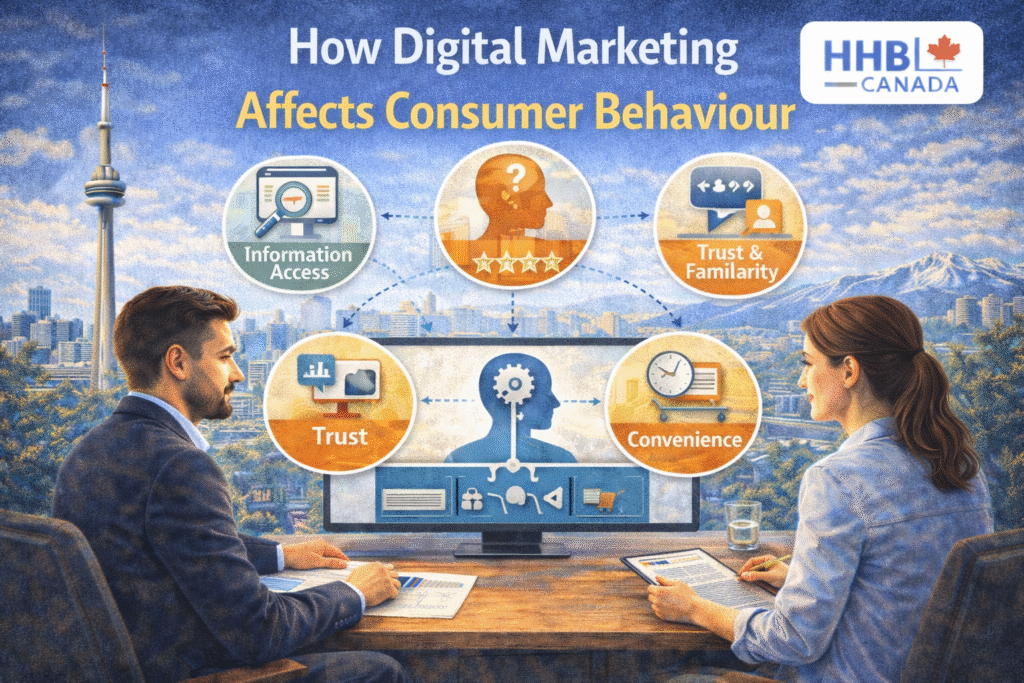
Digital marketing affects consumer behaviour by shaping how people discover options, process information, evaluate risk, and ultimately make decisions.
Rather than persuading consumers directly, digital marketing influences the context in which decisions are made. It controls visibility, frames information, reinforces familiarity, and reduces uncertainty across multiple touchpoints over time.
In modern markets, consumer behaviour is rarely spontaneous. It is cumulative.
Consumer Behaviour Has Shifted From Linear to Nonlinear
Traditional consumer behaviour models assumed a relatively linear path. Consumers became aware of a product, developed interest, evaluated alternatives, and made a purchase.
Digital environments have disrupted this sequence.
Today, consumers move fluidly between stages. They research, pause, compare, revisit, and delay. They may encounter a brand multiple times before consciously engaging with it. Digital marketing supports this nonlinear behaviour by maintaining presence throughout the decision process rather than relying on a single moment of influence.
This shift changes not only how decisions are made, but when they are made.
Information Availability Reduces Dependence on Sales Messaging
One of the most significant ways digital marketing affects consumer behaviour is through access to information.
Consumers are no longer reliant on sales representatives or advertisements as their primary sources of knowledge. Search engines, websites, content, and reviews allow them to educate themselves privately and at their own pace.
Digital marketing ensures that the information consumers encounter is structured, consistent, and aligned with a brand’s positioning. When information is clear and easy to access, consumers feel more confident and less defensive.
Confidence accelerates decision-making.
Quick read: Best Google Ads Agency for Psychiatrists in 2026
Repeated Exposure Builds Familiarity and Lowers Perceived Risk
Familiarity plays a powerful role in consumer behaviour.
Repeated exposure to a brand across search results, websites, content, ads, and social platforms creates a sense of recognition. Over time, this familiarity reduces perceived risk, even before conscious evaluation takes place.
Digital marketing enables controlled repetition. Rather than relying on chance encounters, brands can remain visible across multiple environments where consumers already spend time.
Consumers often choose what feels familiar, especially when options appear similar.
Social Proof Shapes Trust and Validation
Digital marketing amplifies social proof in ways that were previously difficult to scale.
Online reviews, testimonials, ratings, and user-generated content influence how consumers assess credibility. When others publicly validate a brand, individual consumers feel reassured that their choice is reasonable.
This effect is particularly strong in high-consideration purchases, where the cost of making a wrong decision feels significant. Social proof reduces the emotional burden of choice by distributing responsibility across the group.
Consumers are less afraid of being wrong when others have chosen the same path.
Digital Convenience Alters Expectations and Behaviour
Digital marketing has reshaped consumer expectations around convenience.
Consumers now expect immediate access to information, intuitive navigation, and clear explanations. Websites, landing pages, and digital experiences influence whether consumers continue evaluating or disengage.
Behaviour is affected not only by what is said, but by how easily consumers can progress. Friction creates hesitation. Clarity creates momentum.
Digital marketing designs the path of least resistance.
Personalization Increases Relevance and Engagement
Digital marketing allows messages to be aligned with user behaviour, intent, or context.
When consumers encounter content that feels relevant to their needs or stage in the journey, engagement increases. This relevance makes marketing feel helpful rather than intrusive.
Over time, personalization reshapes expectations. Consumers begin to assume that digital experiences will reflect their preferences, history, or interests. When that expectation is met, trust increases. When it is not, friction appears.
Relevance influences not just attention, but satisfaction.
Digital Touchpoints Influence Post-Purchase Behaviour
The impact of digital marketing does not end when a purchase is made.
Post-purchase emails, content, remarketing, and digital support influence satisfaction, loyalty, and advocacy. Consumers who feel guided and supported after buying are more likely to remain engaged and recommend the brand to others.
Behaviour extends beyond transactions. Digital marketing sustains relationships.
In many cases, post-purchase experiences shape long-term brand perception more than the initial decision itself.
Behavioural Influence Is Gradual, Not Instant
A common misconception is that digital marketing changes behaviour immediately.
In reality, its influence is cumulative. Each interaction adds context, familiarity, reassurance, or clarity. Decisions are often made long after the first digital touchpoint occurs.
Digital marketing works by shaping the environment in which choices are made, not by forcing immediate action.
This explains why consistency matters more than intensity.
Quick Read: Medical Reviews SEO
Emotional and Rational Factors Coexist
Consumer behaviour is not purely rational.
Digital marketing affects both emotional and rational drivers. Rationally, it provides information, comparisons, and explanations. Emotionally, it reduces anxiety, builds confidence, and reinforces identity.
The most effective digital marketing respects this balance. It informs without overwhelming and reassures without manipulating.
Behaviour changes when emotion and logic align.
You’re interested: Is Digital Marketing Worth It for Small Businesses in Canada?
Ethical Influence and Long-Term Trust
Because digital marketing influences behaviour, ethical considerations matter.
Transparency, accuracy, and respect for user intent play a role in long-term effectiveness. Manipulative tactics may produce short-term results but often erode trust and damage brand equity over time.
Sustainable digital marketing aligns influence with genuine value. It helps consumers make better decisions rather than simply faster ones.Trust compounds. Manipulation decays.
Final Thoughts
Digital marketing affects consumer behaviour by guiding how people discover information, evaluate risk, and feel about their choices.
It influences decisions through visibility, familiarity, social proof, convenience, and relevance. Rather than pushing consumers to act, it supports the natural decision-making process over time.
When used thoughtfully, digital marketing becomes a framework for clarity and trust, shaping behaviour without coercion.